


+15 More

Digital Aura Portal - FZCO
Building A1, Dubai Digital Park, Dubai Silicon Oasis, Dubai, United Arab Emirates Premises Number 72647 - 001
Business registration number: 70647


gamer-choice.com © 2026
Digital Aura Portal - FZCO
Building A1, Dubai Digital Park, Dubai Silicon Oasis, Dubai, United Arab Emirates Premises Number 72647 - 001
Business registration number: 70647
 March 28, 202621 min ReadElsa
Alongside balance updates and a few divisive design choices, Clash Royale has added an entirely new card category. Hero cards are upgraded takes on already existing cards, and they feel like a hybrid between Evolutions and Champions. In this guide, I’ll go through the best Hero card decks in Clash Royale right now, explain how they work, and break down why they’re performing so well in the current meta.
Best Hero Card Decks in Clash Royale Quick Summary:
If you still don’t have the Heroes you want in your collection, don’t stress over it. Check out our Clash Royale Accounts on Gamer Choice and pick the one that already has the Hero cards you need.

Buy Clash Royale Accounts
Secure Clash Royale accounts with top trophies!

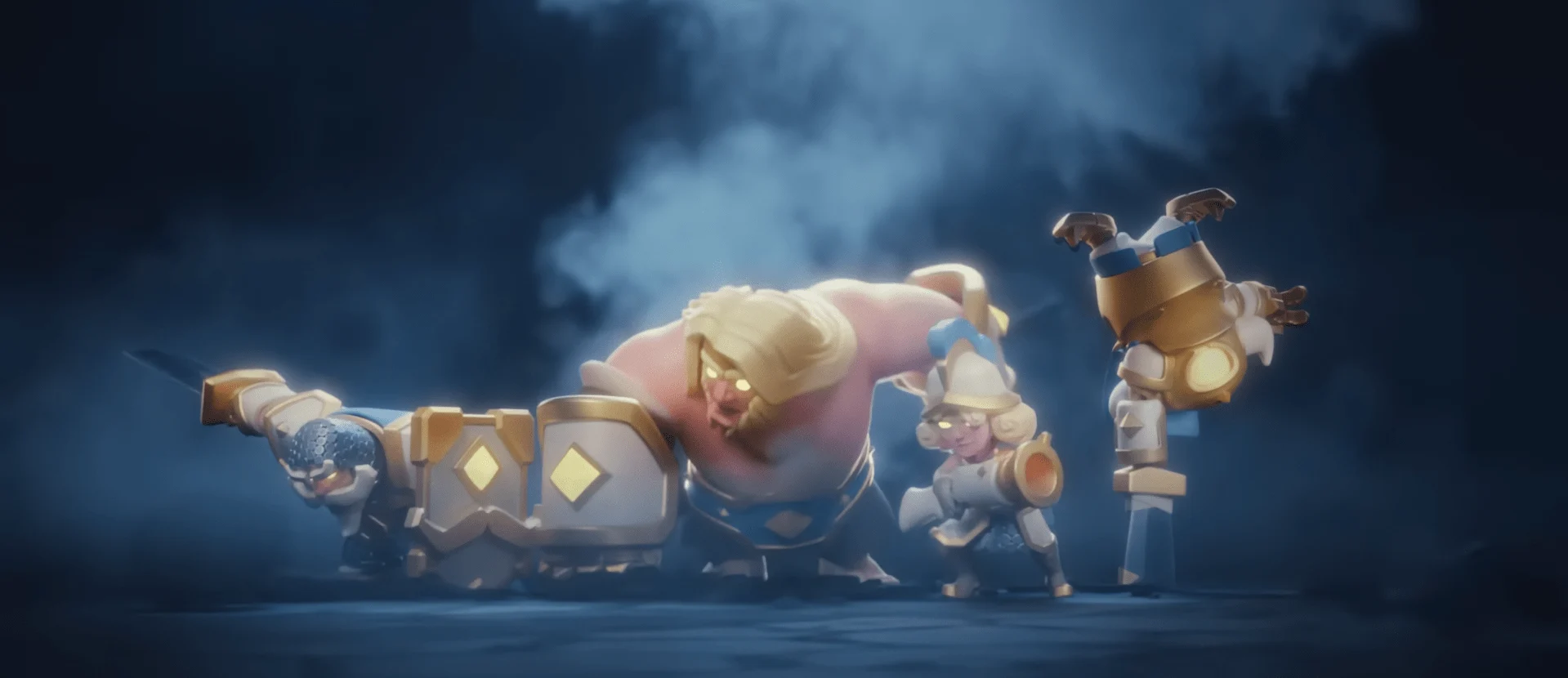
Today, I’m covering several of the most popular meta decks built around Hero cards. I’ll explain the basic strategy behind each deck, how you’re supposed to pilot it, and what its biggest strengths and weaknesses are. With the latest changes, you can no longer run 2 Evolutions and 2 Heroes in the same list. Instead, you now get 1 Evolution, 1 Hero, and 1 flexible slot that can be used for another Hero, an Evolution, or a Champion. That change completely reshaped deck building, and honestly, I think it improved the game more than it hurt it.
Heroes are undeniably strong. That doesn’t mean every Hero is a free win button, though. Some of them are absurdly good in almost any setup, while others need very specific support or a skilled pilot to really shine. Hero Magic Archer, for example, can feel amazing in the right hands and completely underwhelming in the wrong ones. Before getting into the actual decks, let’s quickly go over all the Hero cards and what they bring to the table.
The decks below are all taken from RoyaleAPI, so they’re current, relevant, and backed by actual ladder data. I didn’t choose decks just because of some silly tiny sample size. I’m not going to recommend something with an 86% win rate over 100 games. The main things that matter here are usage rate and win rate. As a rule of thumb, anything above a 52% win rate is already good. Once a deck hits 56% with a solid number of games behind it, you’re looking at something that is either overtuned or outright broken. If you already have the cards, it’s worth abusing these decks this season. If you don’t, I wouldn’t tunnel too hard into chasing every single one, because some of them are almost guaranteed to eat nerfs later. Now that the basics are out of the way, let’s get into the best Hero decks in Clash Royale.

With a 53% win rate and around 8,500 games played, this deck is more than proven. The main game plan here is pretty simple: defend first, then turn your surviving troops into a Hero Giant counterpush. This is not a deck you want to play too aggressively with right away. It performs much better when you play reactively, wait for your opponent to reveal their answers, and figure out which cards they rely on to stop your Hero Giant and Night Witch.
The deck list is:
Your ideal game plan is to identify your opponent’s counters early, stay patient, and then once Double Elixir begins, start dropping Hero Giant after successful defenses. You want at least some of your defensive troops to survive so they can form the core of your push. That’s when you back him up with Night Witch, Musketeer, and Bowler. If you defend cleanly and launch that push with enough Elixir to support it, the deck can feel overwhelming to play against. Save your spells for moments when your troops can’t keep up with the pressure alone, or when you need to remove a specific answer quickly.

This is another deck that leans into defense early and brutal beatdown later. It’s extremely sturdy in the first half of the match thanks to Evo Baby Dragon and Evo Valkyrie, which are among the best defensive cards available right now. Battle Healer keeps your units alive longer than they should be, while Zappies force awkward reactions from the opponent and help you stabilize until you can commit to a proper push.
The deck list is:
Because this deck is very Elixir-hungry, you have to be smart about when you place Elixir Collector. The best time is after your opponent overcommits or when you know they’re missing the cards needed to punish it. The sooner you start snowballing your Elixir lead, the better your chances of suffocating the opponent later. If they fail to punish the Collector, you can often drop Golem earlier than usual and force them into bad trades. Hero Mini P.E.K.K.A. usually plays the role of support damage, helping delete threats behind your main tank, but he can also help split pressure into two lanes if the matchup calls for it. Once Double Elixir starts, this deck becomes terrifying. With a 54% win rate and around 13,000 games played, it’s one of the safer Hero decks to invest in this season.

Hero Musketeer is one of the trickiest Hero cards to justify because her ability is so expensive and punishing if misused. Still, in the right shell, she feels excellent, and this deck is one of the best examples of that. It’s basically a classic Hog Cycle deck with Hero Musketeer added into the mix. That means the playstyle is still all about pressure, pressure, and more pressure. You’re constantly forcing responses, controlling the pace, and trying to outcycle your opponent’s answers.
The deck list is:
Your game plan here is to force mistakes and take advantage of cycle speed. Skeletons help you pull units and distract cheaply, Ice Spirit slows enemy pushes, and Cannon plus Musketeer handle most defensive duties. Before Double Elixir, you generally don’t want to overcommit into giant pushes. The goal is to keep making your opponent respond and gradually chip them down. Once Double Elixir begins, you can turn the tempo up and apply much heavier pressure. That said, defending with this list can still be a bit awkward despite having Fireball and The Log, so you need to stay disciplined. Ultimately, you win by pressuring constantly, forcing inefficient answers, and getting enough chip damage that the opponent eventually collapses.

This one is close to a classic X-Bow list, but Hero Knight makes it noticeably more forgiving. X-Bow has always been a deck that rewards timing, patience, and matchup knowledge. It’s difficult to use because the X-Bow itself is fragile and expensive, so you need to know exactly when to commit and how to protect it. Hero Knight doesn’t magically turn it into an easy deck, but he absolutely lowers the skill floor a little while still keeping the deck very strong. Right now, it’s sitting at a ridiculous 58% win rate in the meta.
The deck list is:
X-Bow decks are all about choosing the correct moment to attack, then instantly shifting from offense back into defense and then into offense again. That back-and-forth flow is what makes the archetype so hard to master. X-Bow itself gets deleted very quickly if you place it at the wrong time, which means every small mistake matters. You need to pressure your opponent in a way that forces them to keep thinking about your options. X-Bow is also fantastic at baiting out spells, but if you misuse your support cards, you can easily lose a tower for it. Before Double Elixir, you should usually stay patient and focus on strong defenses with Evo Tesla and Evo Archers. Hero Knight is especially valuable against stronger enemy pushes and later in the game when you want to turn a defense into a counterattack. It’s still one of the hardest decks to learn in Clash Royale, but if you stick with it, the payoff is huge. On lower ladder in particular, a lot of players still don’t know how to play against a well-piloted X-Bow. Once Double Elixir begins, the deck becomes much smoother because your cycle speeds up so much. Some matchups can even end before the second half if your pressure is clean enough.

Hero Ice Golem is absurdly strong right now, and there are several good decks built around him. The one I picked for this list is the 2.9 Cycle variant because it combines a brutally efficient defense with a very annoying counterattack pattern. Bomb Tower, Barbarian Barrel, and Evo Skeletons make it hard for opponents to get through you at all, and Hero Ice Golem makes that wall even nastier. Once you stabilize, you transition into Balloon pressure and punish overextensions hard.
The deck list is:
I wouldn’t call this deck mindless, but it’s definitely easier to pick up than something like X-Bow. The priority here is efficient defense. You want to spend as little Elixir as possible to stop the opponent, then flip that advantage into offense with Balloon once you know they’re low on answers. Hero Ice Golem works on both sides of the field thanks to his freeze ability, and it’s especially nasty because that freeze also affects towers. If you sync the ability properly with your Balloon, you can deal devastating damage very quickly. The general rhythm of the deck is defend, chip with Miner, annoy the opponent into awkward trades, then hit hard with Balloon plus Hero Ice Golem support. It’s an easy deck to like because it’s both effective and frustrating to play against, and Balloon remains one of the most annoying cards in the game when the opponent is off-cycle.

This deck is the kind of list that makes people genuinely hate Clash Royale. It’s aggressive, oppressive, and incredibly annoying to face, but it also has more defensive utility than it looks like it should. Vines and Barbarian Barrel help stop pushes, while Hero Wizard completely changes the way the deck functions by making it far better both defensively and offensively. Some Hero cards feel specialized. Hero Wizard does not. He is amazing at everything.
The deck list is:
At its core, this is a bridge spam deck, although “spam” feels slightly misleading when the average Elixir is 3.9. It’s still fast enough to pressure repeatedly, but the better way to think about it is controlled aggression. Before Double Elixir, you often start with Giant Skeleton and Royal Ghost to chip and create uncomfortable responses. Dark Prince helps protect your pressure and adds even more lane control. When defending, Hero Wizard is your star. He can shut down incoming troops, then immediately become part of a terrifying counterpush. Back him up with Mother Witch and Vines, and suddenly your opponent is the one in trouble. The reason this deck is so strong is that it has multiple ways to attack towers and multiple ways to force bad responses. You shouldn’t play it by mindlessly dumping cards at the bridge. Instead, look at your options, think about what your opponent has already used, and then choose the right kind of push. From my experience, this is one of the absolute best Hero decks in Clash Royale right now.

This deck was a nightmare last season, and it’s still a nightmare now. Hero Goblins are miserable to deal with because killing them once often isn’t enough. Their revival mechanic keeps forcing another response, and if your opponent slips up at all, those small chunks of tower damage add up very quickly. Like every bait deck, the core idea is to trick your opponent into answering the wrong threat and then punish them when the right answer is no longer available. This is more of a spellbait list than a beatdown one, built around repeated chip pressure from cheap but highly annoying troops.
The deck list is:
This deck usually gets its damage through Hero Goblins, Skeleton Barrel, or Evo Royal Ghost. All three are dangerous, cheap enough to pressure repeatedly, and annoying enough to create constant awkward decisions. Defensively, the deck is honestly not amazing. You can rely on Royal Ghost, Dart Goblin in the backline, and The Log to clean up certain pushes, but overall your defensive ceiling is limited compared to more balanced archetypes. That’s fine, though, because the deck is so oppressive offensively that you often don’t need to defend much if you’re ahead in tempo. A common pattern is to start with Royal Ghost, force some kind of response, then throw in Goblins to bait out spells and overwhelm what’s left. At least one piece of pressure often gets through. The one big rule is not to stack your cards too hard in one area, because a single Fireball can erase your whole setup if you get careless.

This is still basically a classic LavaLoon deck, but the supporting cast makes it much stronger than older versions. The synergy is excellent, and the individual cards are powerful enough to fix a lot of problems by themselves. Hero Mega Minion is especially important here because he functions as both a defensive anchor and an offensive support piece. He’s one of the cleanest answers to popular threats like Hero Wizard and Hero Magic Archer, which is a huge deal in this meta.
The deck list is:
The way you win with this deck is familiar if you’ve ever played LavaLoon before. You use Tombstone to pull troops and force out early responses, then reset problem situations with Fireball when needed. Lava Hound and Balloon are your main win conditions, and you build around them with your three most important support cards: Evo Baby Dragon, Hero Mega Minion, and Evo Valkyrie. Those cards give you strong area control, great support damage, and enough defensive value that you can survive until the right push window opens. Hero Mega Minion is particularly valuable because he helps erase larger clusters of enemies and can chase down faster support troops that would otherwise ruin your push. You’re usually looking to build one big wave after your opponent wastes Elixir or misuses a key answer. Maybe it’s just me, but this deck feels less exciting than some of the others. It wins by being brutally efficient and not really letting the opponent play the way they want, which is very strong even if it isn’t the most creative feeling deck on the list.

This is one of my favorite archetypes of all time, and Hero Barbarian Barrel gives it a very noticeable upgrade. The Royal Giant plus Royal Ghost combination has always been able to pile on serious tower damage, and now the deck has an even better way to deal with swarm-based counterplay. It sits somewhere between a control deck and a beatdown deck. In a way, it resembles the previous list because it can play slowly and defensively, but it has more precise interactions and more room for outplays.
The deck list is:
One of the old weaknesses of Royal Giant decks like this was that they could sometimes get overwhelmed by cards that spawn lots of bodies, like Skeleton Army and similar swarm units. Hero Barbarian Barrel helps fix that problem immediately. Between the double-roll pressure from the Hero ability and Electro Spirit support, you can handle crowds much more comfortably and recover from mistakes more easily. Fisherman plus Hunter remains one of the best defensive combos in the game and is especially good at deleting ranged threats such as Hero Magic Archer. Of course, really smart opponents can still predict the Fisherman pull and try to outplay you, but that’s where the mind games start. Skeletons give you cheap cycle and tiny defensive windows while you wait for Elixir. Your overall plan is to control the opponent’s first-half pushes, stay stable, then convert that control into Royal Giant and Ghost pressure once the game speeds up. This deck sits around a 57% win rate, which is already excellent, but there’s still one deck above it.

This deck is just broken. There’s really no nicer way to put it. It has a 60% win rate with more than 4,200 games played on a fresh patch, which is ridiculous. It takes one of the most irritating archetypes from the last year and makes it even more obnoxious by reintroducing Flying Hogs pressure alongside Goblin Hut. The whole deck is built around constant chip damage with Royal Hogs, forcing your opponent to split their attention between both towers and spend Elixir on awkward defenses that never feel efficient.
The deck list is:
Hero Magic Archer fits into this deck almost perfectly. He functions like a support attacker, even if that’s not really an official term. While your opponent is busy trying to stop your Royal Hogs, Hero Magic Archer gets to sit safely behind the pressure and fire down the lane for free. His absurd range and Hero utility make those interactions even nastier. Goblin Hut is also a newer-feeling inclusion in this setup, at least compared to some older versions of the archetype, and it adds even more distraction and passive pressure. It pulls attention away from Hero Magic Archer and keeps your opponent from ever feeling comfortable. The rest of the deck is there to clean up swarms, manage tempo, and keep your push alive long enough to matter. Barbarian Barrel and Electro Spirit are especially useful for making sure small troops don’t erase your Hogs too quickly. In gameplay terms, this is a control plus split-push deck that is actually pretty straightforward to learn. You pressure, you chip, you force bad trades, and eventually the opponent runs out of room to breathe. It’s the best Hero deck in Clash Royale in 2026, and if you already have the cards for it, this is the time to abuse it and climb.
Read our other Clash Royale guides:

Buy Clash Royale Boost
Boost your Clash Royale trophies with pros now!
The strongest option right now is EvoRHogs GobHut EvoGhost 3.3 Cycle. It consistently performs at the top of the ladder with around a 60% win rate across thousands of matches, making it one of the most reliable choices in the current meta.
Yes, but it depends on how you build your deck. The current system allows one Hero and one Evolution by default, with an additional flexible slot that unlocks later, letting you choose between adding another Hero, Evolution, or Champion.
Right now, Hero Magic Archer stands out as the most powerful option. His low-cost ability provides incredible value, allowing him to stay alive longer, avoid key spells, and continuously deal damage across the arena.
You can unlock Hero cards by collecting Hero Coins, which are available through seasonal rewards, special shop bundles, and limited-time chests. Additionally, newer progression systems grant a free Hero once you reach specific Arena milestones.