


+15 More

Digital Aura Portal - FZCO
Building A1, Dubai Digital Park, Dubai Silicon Oasis, Dubai, United Arab Emirates Premises Number 72647 - 001
Business registration number: 70647


gamer-choice.com © 2026
Digital Aura Portal - FZCO
Building A1, Dubai Digital Park, Dubai Silicon Oasis, Dubai, United Arab Emirates Premises Number 72647 - 001
Business registration number: 70647
 March 10, 20266 min ReadElsa
Half-Life’s most enduring mystery is a man in a blue suit carrying a briefcase. In a series filled with interdimensional invaders that bend space and time, that might sound strangely ordinary. Yet G-Man has fascinated players ever since he first appeared in 1998. From his eerie cameos throughout Black Mesa to the finale where he pulls Gordon out of the conflict and presents him with an ultimatum aboard a tram drifting through the void, he has remained unforgettable. No one truly knows who he is, what he wants, who his employers are, or even what species he belongs to. That uncertainty is exactly what makes him so compelling.
If you’re not fully caught up on the games, or you’re still unsure what G-Man’s place in Half-Life actually is, here’s the broad outline. G-Man delivers a specimen to Black Mesa that sparks an alien disaster, one that eventually draws the Combine to Earth. He then sends Gordon into the future, where humanity is already under Combine control and Gordon becomes a central figure in the resistance. After the Citadel explodes, G-Man abandons Gordon and Alyx Vance to their fate, only for the vortigaunts to intervene and pull them free. Later, G-Man gives Alyx a message intended for her father, warning of the death that awaits him. When Eli does die, G-Man reaches back through time and persuades a younger Alyx to enter his service, allowing her to prevent her father’s death in the future. These events are spread across the entire series, including a VR-exclusive game, so it’s understandable if all of this sounds a little tangled.
What makes everything even more confusing is how little sense G-Man’s actions make on the surface. Why would he bring the Combine to Earth only to later position Gordon to cripple them? Why leave Alyx behind to die in one moment, only to recruit her through an altered timeline in another? And what is the true nature of his connection to the vortigaunts, who seem uniquely capable of resisting or disrupting his influence? There are clues, but never enough to form a clear answer. G-Man speaks of employers and hints that even he operates under restrictions. It does not seem that he is incapable of direct action because he lacks power, but because he is bound by rules or policy, which explains why he relies on human agents to do his work. Beyond that, his abilities seem almost impossible to measure. He can pass between dimensions, move through time, and appear wherever he pleases as if reality itself is just another corridor for him to step through. Some people see him as a godlike being. Others believe he might be a future version of Gordon. Another popular interpretation imagines him as an interdimensional operative serving some larger authority that watches over history and nudges it in carefully chosen directions.
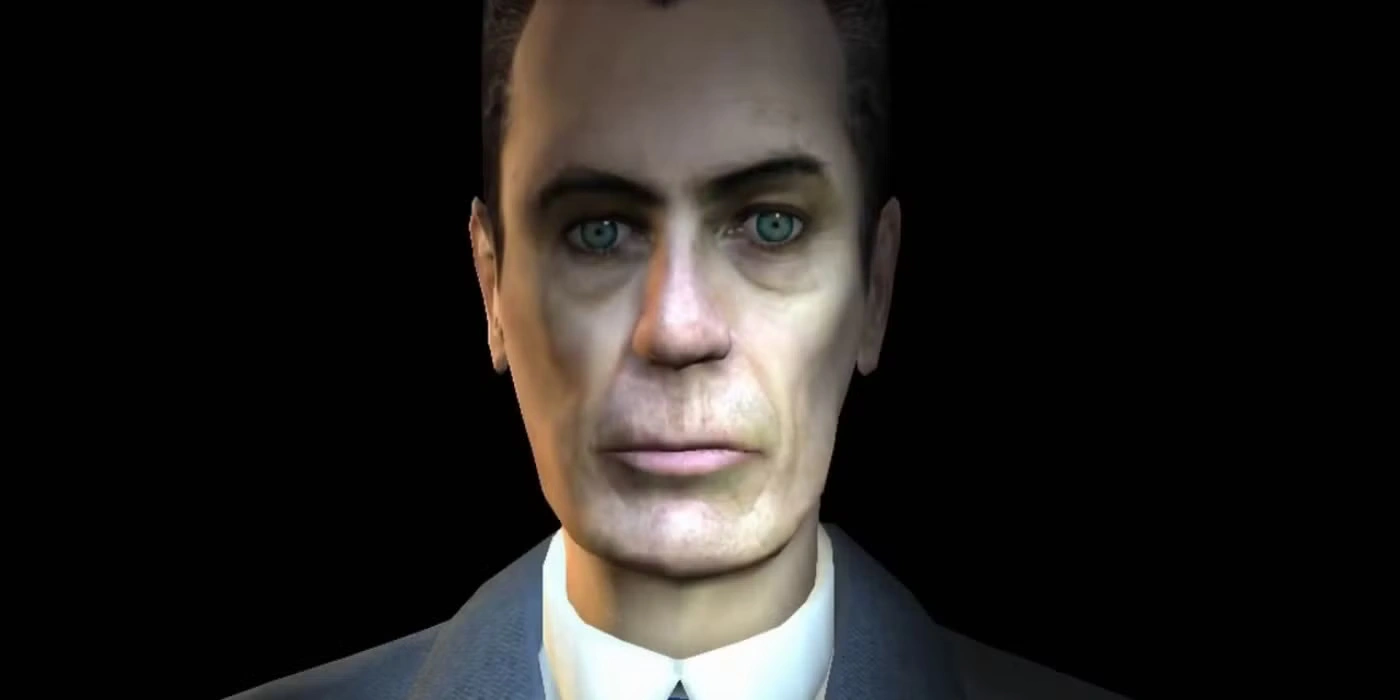
There have been countless theories over the years, and every new game has reshaped them. At the absolute minimum, we can say he is some kind of observer who interferes in events on behalf of a hidden force, one that may be even more powerful or significant than the Combine themselves. The reason for that interference remains a mystery, but perhaps that is for the best. Any official explanation would struggle to match the years of speculation fans have built up in their own minds. The appeal of G-Man lies in the uncertainty, in following fragments of evidence and trying to assemble an answer that always remains just out of reach. My own view is that his people may once have suffered under the Combine, but eventually discovered a way to rise beyond them. Now they move backward and sideways through time, manipulating events on different worlds to chip away at the Combine’s strength across history. Those worlds then become battlefields where tested agents can strike at a vast empire through its weaker points and satellite structures.
A definitive answer would probably weaken that mystique rather than strengthen it. After so many years of theories, expectations have grown too large for any reveal to fully satisfy them. But that isn’t really a problem. G-Man has stayed relevant precisely because he keeps people talking, debating, and searching for meaning in every line and appearance. For a series like Half-Life, which has gone through long quiet stretches, that kind of enduring fascination is invaluable. Even though the last major Half-Life release is now years behind us, fans are still dissecting this unsettling Men in Black-style figure from the late ‘90s and wondering whether the writers themselves have a complete answer. At a certain point, that uncertainty becomes part of the character’s identity. Whether gamer choice readers want a solution or not, G-Man works because he feels impossible to pin down.
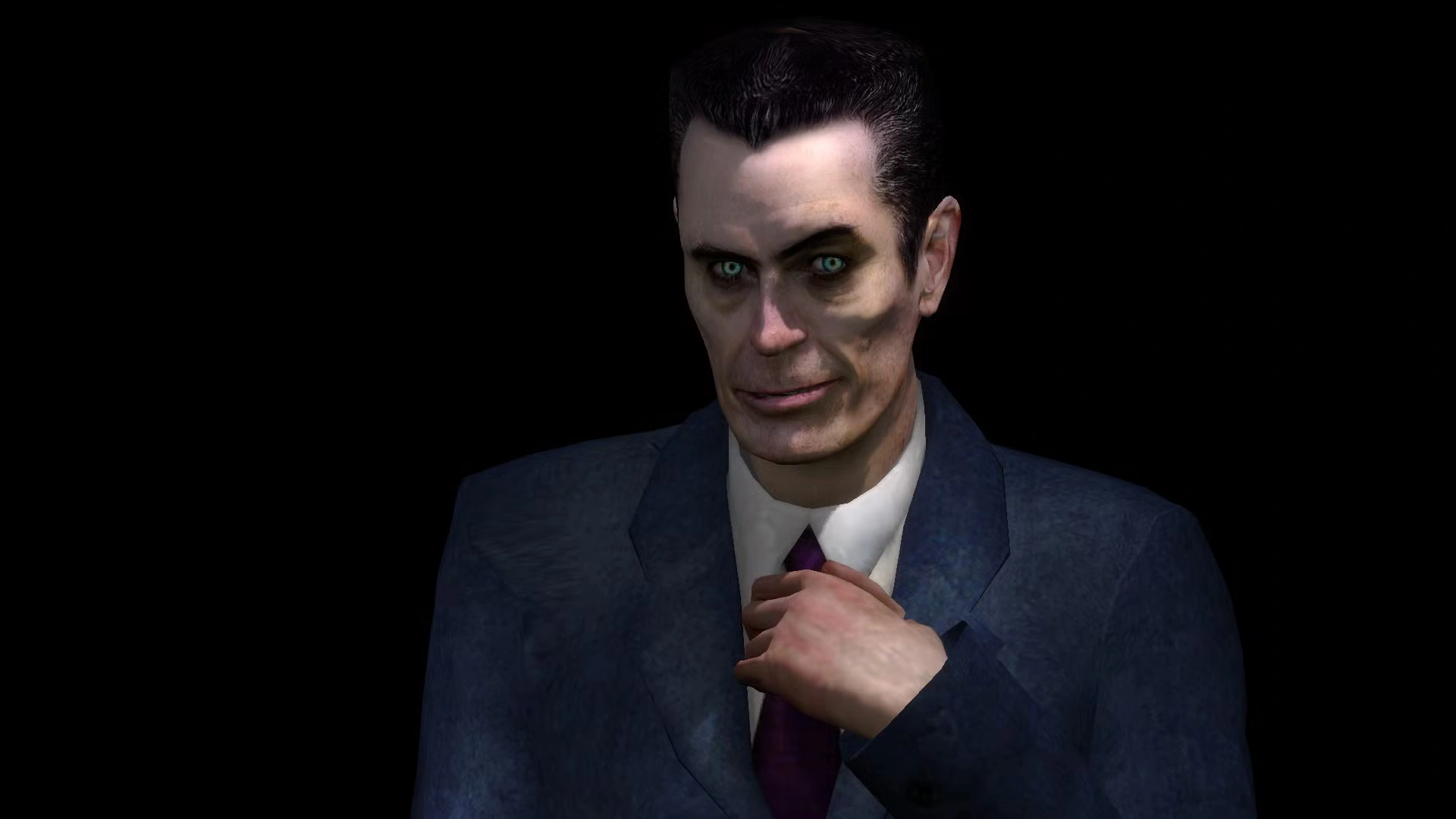
By the end of Alyx, Gordon reclaims his crowbar from Eli Vance, and the two appear ready to go after G-Man in an effort to rescue Alyx from his grasp. For the first time in the series, G-Man is framed much more directly as the central antagonist, bringing him into focus in a way the older games carefully avoided. If Half-Life 3 ever does happen, and I’m still willing to believe it might, it will be fascinating to see how that shift is handled. Can G-Man function as a more active villain without losing the qualities that made him so effective in the shadows? And if Valve finally decides to reveal more about him, can that version of the character possibly meet the expectations built up over decades?
Thankfully, Half-Life has never been a series that explains itself through long villain speeches and tidy lore dumps. Breen tried to justify his choices to people who once knew him, exposing his fear and weakness before ending up transformed into something grotesque and pathetic. The Nihilanth in the original Half-Life spoke in eerie, fragmented phrases that echoed through its chamber, hinting at G-Man’s intentions while only making the situation feel stranger. G-Man himself has always communicated in cryptic half-truths, placing Gordon in impossible scenarios and presenting choices that are never really choices at all. If the story does eventually lead to a confrontation with him, it is hard to imagine him suddenly laying everything out in a neat monologue that explains his past, his motives, and the full scope of his plans. More likely, he would only deepen the mystery, weaving yet another web of suggestions and contradictions that leaves us with even more to question.
You might think finally learning who G-Man really is, or even just discovering his true name, would make him more interesting. But it would probably do the opposite. His power comes from the fact that he cannot be neatly explained or comfortably understood. The Combine feel so overwhelming because we can never fully grasp their scale, their origin, or the full extent of their reach, and G-Man benefits from the same unknowability. He feels disturbing because he exists just outside our understanding, too close to reality to be dismissed and too strange to ever feel safe. Trying to define him too clearly would strip that away. It would be like turning on the light and finding nothing in the closet after all. The fear vanishes the moment the mystery is fully exposed, and with G-Man, that uncanny sense of something deeply wrong is far more powerful than any explanation could ever be.