


+15 More

Digital Aura Portal - FZCO
Building A1, Dubai Digital Park, Dubai Silicon Oasis, Dubai, United Arab Emirates Premises Number 72647 - 001
Business registration number: 70647


gamer-choice.com © 2026
Digital Aura Portal - FZCO
Building A1, Dubai Digital Park, Dubai Silicon Oasis, Dubai, United Arab Emirates Premises Number 72647 - 001
Business registration number: 70647
 March 13, 202616 min ReadElsa
In this WoW Midnight Haranir guide, we’ll cover everything important about this new allied race, including how to unlock it, which classes it can play, the racial abilities it brings, and the customization features and new druid forms that make it stand out.
Whenever Blizzard introduces a new race to retail WoW, it always brings a lot of excitement. New races come with fresh roleplay opportunities, more character customization, and a long list of race-specific rewards and features, from racial mounts and unique abilities to druid shapeshift forms, heritage armor, and more. In this Haranir Guide for WoW Midnight, we’ll break down what this race is about, how to unlock it, and what you can expect once it becomes available. The Haranir are a wild and deeply nature-bound people devoted to protecting the world trees, so if you enjoy earthy aesthetics, primal themes, or just want a race with strong visual identity and great transmog potential, there is a lot here to like.
Want to play Haranir but don’t have time to push through the full unlock process yourself? Buy Haranir Allied Race Boost at Gamer Choice and let experienced players handle the unlock for you. Instead of spending hours on the questline, you can jump straight into Midnight and start playing Haranir right away.

Buy WoW Boost
Get Raid Carries, Mythic+ Runs & Leveling Services!

Read our other WoW Midnight guides:

If you’re wondering how to unlock Haranir in WoW Midnight, the process appears to be fairly simple. To gain access to the race, you need to complete the Harandar storyline called Emergence. Harandar serves as the homeland of the Haranir, and this questline acts as their introduction and unlock requirement. One important thing to keep in mind is that your character must be level 83 before you can begin. Below, you’ll find a full list of quests, objectives, and coordinates connected to the unlock process.
| Step | Quest Name | Description | Start Location (Coords) | End Location (Coords) |
|---|---|---|---|---|
| 1 | The Frenzied March | Return to Eversong Forest using the Emergency Rootway to investigate the spreading Lightbloom. | Harandar – Orweyna (52.3, 55.4) | Eversong Woods – Orweyna (62.2, 59.4) |
| 2 | Cull and Burn | Collect 10 Corrupted Bones from Lightbloom-infested wildlife to prevent further spread. | Eversong Woods – Orweyna (62.2, 59.4) | Eversong Woods – Orweyna (62.2, 59.4) |
| 3 | Stem the Tides | Burn 5 Lightfrenzy Rootways to cut off the corruption’s path back to Harandar. | Silvermoon City – Halduron Brightwing (36.6, 68.6) | Silvermoon City – Halduron Brightwing (36.6, 68.6) |
| 4 | Expeditious Retreat | Rescue 3 beleaguered Farstriders by slaying Swarming Shinesnippers, Lightsaptors, and Shinemaws. | Silvermoon City – Halduron Brightwing (36.6, 68.6) | Eversong Woods – Halduron Brightwing (58.6, 57.2) |
| 5 | A Last Resort | Overload three Phoenixfire Runestones at Palehill, Lakegrove, and Barksnarl. | Silvermoon City – Halduron Brightwing (36.6, 68.6) | Eversong Woods – Halduron Brightwing (58.6, 57.2) |
| 6 | Survive | Survive the Lightbloom onslaught and protect Rommath while the ritual is underway. | Eversong Woods – Orweyna (62.2, 59.4) | Eversong Woods – Orweyna (62.2, 59.4) |
| 7 | The Gift of Aln'hara | Use Andust to rout the Lightbloom Frenzy in Lash’ra by empowering allies and destroying corrupted forces. | Eversong Woods – Orweyna (62.2, 59.4) | Eversong Woods – Orweyna (62.2, 59.4) |
| 8 | Light Finds a Way | Slay three Lightfrenzy Tyrannosaptors in Lightbloom Lash’ra before they overwhelm the Farstriders. | Eversong Woods – Halduron Brightwing (58.6, 57.2) | Silvermoon City – Halduron Brightwing (36.6, 68.6) |
| 9 | Quelling the Frenzy | Confront and defeat Lightwarden Ruia to end the Lightbloom frenzy at its source. | Eversong Woods – Orweyna (62.2, 59.4) | Eversong Woods – Orweyna (58.4, 55.4) |
| 10 | Rise of the Haranir | Meet Orweyna and Halduron in the Gardens of Remembrance to formalize the Haranir’s future. | Eversong Woods – Orweyna (58.4, 55.4) | Silvermoon City – Orweyna (36.6, 68.6) |
Now that you know how to unlock Haranir, here’s a shorter summary of the storyline itself in case you are the type of player who skips through NPC dialogue.
Emergence begins with what seems like a contained and unusual issue, a spreading Lightbloom presence in Eversong Woods. At first, it looks like a strange ecological disturbance, but it quickly becomes clear that the threat is much more serious. The frenzy tied to the Lightbloom is capable of twisting beasts, corrupting ancient roots, and damaging the natural balance connected to Aln’hara herself. The sin’dorei respond the way they always do, with order, urgency, and discipline, but it soon becomes obvious that ordinary tactics are not enough to stop a force that feeds on both the land and the beliefs rooted within it.
As the Haranir Emergence questline progresses, the story moves from attempted containment into outright crisis. Farstriders are pushed into retreat, sacred runestones are driven beyond safe limits in a desperate effort to hold the line, and entire areas are placed in danger just to stop the Lightbloom from reaching Harandar. The struggle is not only against maddened wildlife and corrupted growths, but also against the consequences of reckless power. Through ritual work, sacrifice, and direct action, the player becomes a key figure in buying time for the Magisters and preventing Eversong from collapsing into chaos.
The final part of Emergence is less about destruction and more about renewal, trust, and the path that comes after survival. With the support of the Haranir and the blessing of Aln’hara, the source of the Lightbloom frenzy is finally broken. Defeating Lightwarden Ruia stops the immediate danger, but the greater significance lies in what follows. The ending is not framed simply as a victory over an enemy. It is about understanding earned through hardship and an alliance formed through shared struggle. By the conclusion of Emergence, the Haranir are no longer isolated protectors of Harandar alone. They begin stepping into the wider world, with their future now tied to both their homeland and the sin’dorei, marking the start of a new alliance rather than the closing chapter of a single disaster.
Completing Rise of the Haranir rewards the achievement Allied Race: Haranir, which unlocks Haranir in WoW Midnight as a playable allied race.

Continuing our Haranir guide WoW, let’s go over the class combinations available to this race. As a playable allied race in Midnight, Haranir have access to a broad class roster and can cover a wide variety of group roles. That makes them one of the more flexible allied races in the game, with options for tanking, healing, and all major forms of damage dealing. Their class availability also makes sense within their lore. Druids and Shamans reflect their bond with roots, the world trees, and living natural power, while more martial paths like Warriors and Hunters suit a people who spend their lives defending Harandar from constant danger.
Below is a full breakdown of every Haranir class option and the roles each one supports.
| Class | Available Roles | Armor Type |
|---|---|---|
| Druid | Tank, Healer, Melee DPS, Ranged DPS | Leather |
| Hunter | Melee DPS, Ranged DPS | |
| Mage | Ranged DPS | Cloth |
| Monk | Tank, Healer, Melee DPS | Leather |
| Priest | Healer, Ranged DPS | Cloth |
| Rogue | Melee DPS | Leather |
| Shaman | Healer, Melee DPS, Ranged DPS | |
| Warlock | Ranged DPS | Cloth |
| Warrior | Tank, Melee DPS | Plate |
From the perspective of role coverage, Haranir are able to fit into every major need in both PvE and PvP. Tank players have several strong choices through Druid, Monk, and Warrior. Players who prefer healing can choose Druid, Monk, Priest, or Shaman. DPS players get access to nearly every possible combat style, including ranged casters, ranged weapon users, and quick melee-focused builds.
From a lore standpoint, this variety works extremely well with what players discover during the Emergence storyline and throughout Harandar. Some Haranir deliberately cut ties with their goddess and take up the path of the Shul’ka, becoming monster hunters shaped by survival and violence. Others remain closer to Aln’hara’s guidance, leaning into restoration, ritual, and nature-infused magic.
As an added bonus, Haranir Hunters get access to a unique pet called the Saptor. Haranir Shamans also receive their own distinctive totem appearances for their abilities.
When the Haranir enter the wider world in Midnight, they do so not as a narrowly defined society built around one tradition, but as a people prepared to face the Void in whatever role the fight requires.

The Haranir racial abilities strongly reflect who they are as a people: underground guardians tied to ancient roots and the hidden life beneath Azeroth. Their racial toolkit combines mobility, nature-themed utility, and passive combat benefits that remain useful throughout leveling, outdoor play, and endgame content. None of these racials feel like throwaway gimmicks. Instead, they support the race’s identity and reinforce the idea of a people shaped by ritual, survival, and an intimate connection to the living roots of the world.
Below is a full breakdown of every Haranir racial ability and what it offers in practice.
| Racial Ability | Effect | Practical Use |
|---|---|---|
| Rootwalking | Perform a ritual to teleport to the Cradle in Harandar. When cast near world tree roots in Harandar, it allows travel to that specific world tree. | Acts as a unique teleport network tied to world trees, making travel around Harandar and related zones far more convenient. |
| Thorn Bloom | Summons thorns that damage up to 8 enemies and heal up to 8 allies within 10 yards of the target area. | Strong hybrid AoE utility for open-world combat, events, and emergency group healing. |
| One With Nature | Increases Herbalism skill by 5 and grants 10 Finesse, increasing bonus material yields. | Excellent profession synergy for gatherers and steady gold generation over time. |
| Lash Out | Increases critical strike damage by 1% and critical strike healing by 1%. | A universal throughput bonus that benefits all specs without affecting rotations. |
| Subterranean Predator | Gain 10% increased experience from killing Aberrations, Beasts, and Elementals. Deal 1% increased damage to those enemy types. | Noticeable leveling speed boost and minor damage bonus against common open-world enemies. |
From a gameplay perspective, Haranir racials feel broadly practical instead of overly niche. Rootwalking is one of the most flavorful movement tools introduced with Midnight, especially for players who expect to spend a lot of time in Harandar. Thorn Bloom stands out in particular because it is unusual for a racial to offer both offensive and defensive value in a single active ability, which makes it genuinely useful in solo content as well as group scenarios.
The passive racials also provide consistent long-term value. One With Nature benefits characters focused on gathering and professions, making it attractive for Herbalism and other open-world activities. Lash Out offers a clean, reliable combat bonus that remains relevant as your gear improves. Subterranean Predator ties directly into Haranir allied race lore by rewarding players for fighting the very kinds of threats the Haranir have spent generations hunting beneath the surface.
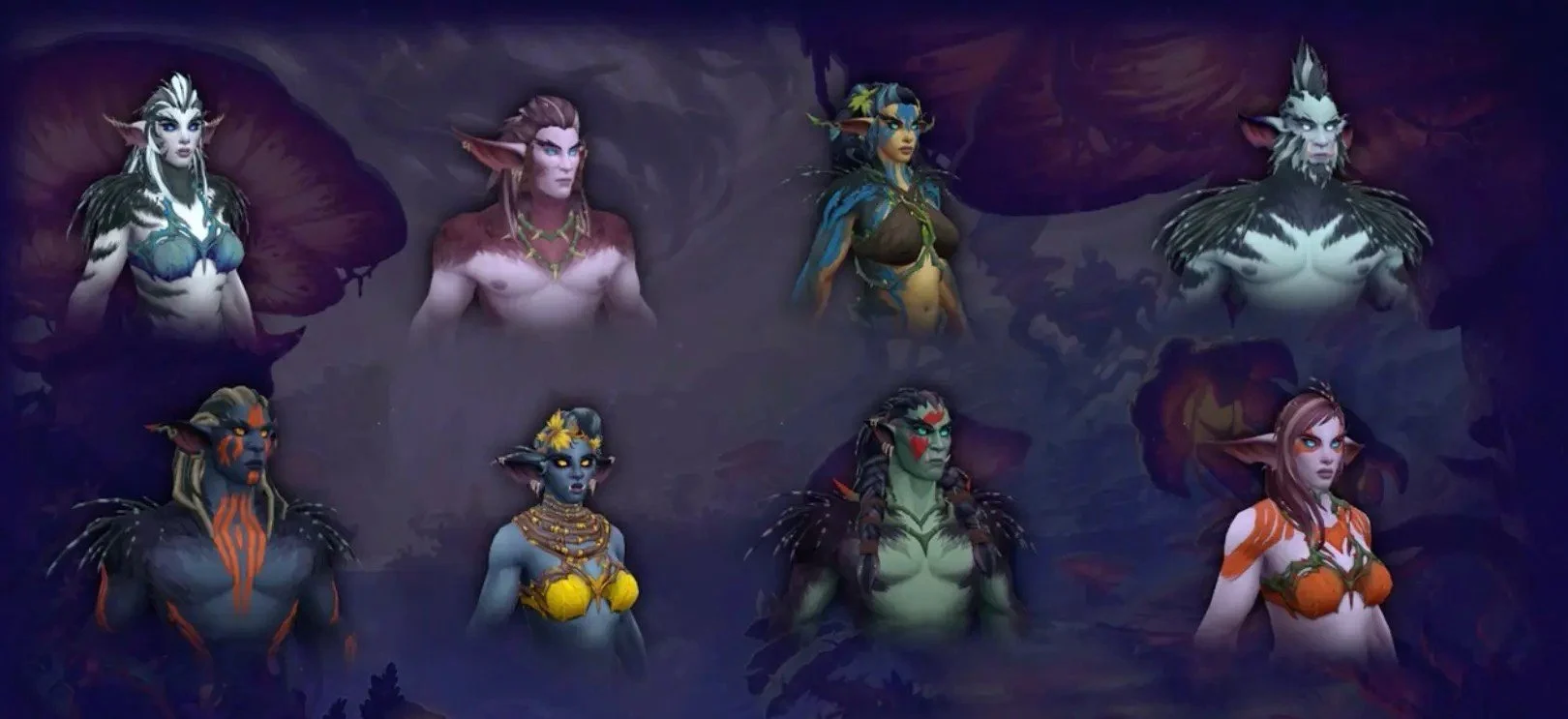
Haranir customization is chosen during character creation and can later be changed at the Barber Shop. Visually, this race is built around themes of organic growth, living texture, and natural form. Many of their customization features look as though they developed from the body itself rather than being crafted or attached afterward, which reinforces the Haranir connection to roots, thorns, burrowing life, and subterranean ecosystems. Some of the options listed below are based on datamined information and could still change before launch, but the overall direction, style, and scale of the customization system are already quite clear.
| Customization Category | Female Haranir | Male Haranir |
|---|---|---|
| Skin Color | ✅ | ✅ |
| Body Fur Pattern | ✅ | ✅ |
| Body Fur Color | ✅ | ✅ |
| Body Paint Pattern | ✅ | ✅ |
| Body Paint Color | ✅ | ✅ |
| Face | ✅ | ✅ |
| Face Paint | ✅ | ✅ |
| Eye Color | ✅ | ✅ |
| Eyesight | ✅ | ✅ |
| Eyebrows | ✅ | ✅ |
| Face Fur Pattern | ✅ | ✅ |
| Ears | ✅ | ✅ |
| Earrings | ✅ | ✅ |
| Necklace | ✅ | ✅ |
| Jewelry Color | ❌ | ✅ |
| Nose | ✅ | ✅ |
| Feet | ✅ | ✅ |
| Hairstyle | ✅ | ✅ |
| Hair Color | ✅ | ✅ |
| Hair Highlight Color | ✅ | ✅ |
| Hair Spines | ✅ | ✅ |
| Hair Spine Color | ✅ | ✅ |
| Shoulder Spines | ✅ | ✅ |
| Shoulder Spine Color | ✅ | ✅ |
| Tusks | ✅ | ✅ |
| Underclothes Color | ✅ | ✅ |
| Beard | ❌ | ✅ |
| Moustache | ❌ | ✅ |
| Sideburns | ❌ | ✅ |
| Piercings | ❌ | ✅ |
What makes Haranir customization especially appealing is how layered and organic it feels. Instead of relying on armor-like features placed on top of the model, many of their visual elements appear to be natural extensions of the body. Thorns, fur, spines, and paint all feel integrated into the design rather than added afterward.
Spines are among the most recognizable features of the race. Many hairstyles let players toggle hair spines on or off, which can dramatically alter the silhouette of the character. Some hairstyles support large spine crests that make the profile feel more aggressive and exotic, while others offer subtler ridges running along the head or upper body. On male Haranir, these spines can even merge into facial hair options, creating spiny beards or ridged sideburns. Shoulder spines add even more to that defensive and predatory look, and they can often be color-matched with the hair or fur to create a more cohesive design.
Fur and paint options also work well together and allow for either contrast-heavy designs or a more unified visual theme. Fur can appear across both the body and face, with linked color selections helping the entire character feel consistent. Face and body paint provide an extra layer of storytelling, from faint ritual marks to striking, high-contrast patterns that stand out clearly against darker fur colors. Since paint shades carry consistently between the face and body, it becomes easier to create either ceremonial-looking characters or ones that feel more practical and battle-worn.
Jewelry and decorative pieces lean heavily into the Harandar visual identity. Earrings, necklaces, and piercings often resemble thorned vines, roots, or other living natural structures rather than conventional forged metal. Several adornments come with different color variants, allowing players to either emphasize their plant-based aesthetic or keep those details understated.
Feet options are also more important than they might sound at first. Haranir can keep relatively humanoid feet or switch to clawed feet, which create a much more feral appearance. That option pairs especially well with subterranean hunter themes or Druid-focused character concepts.
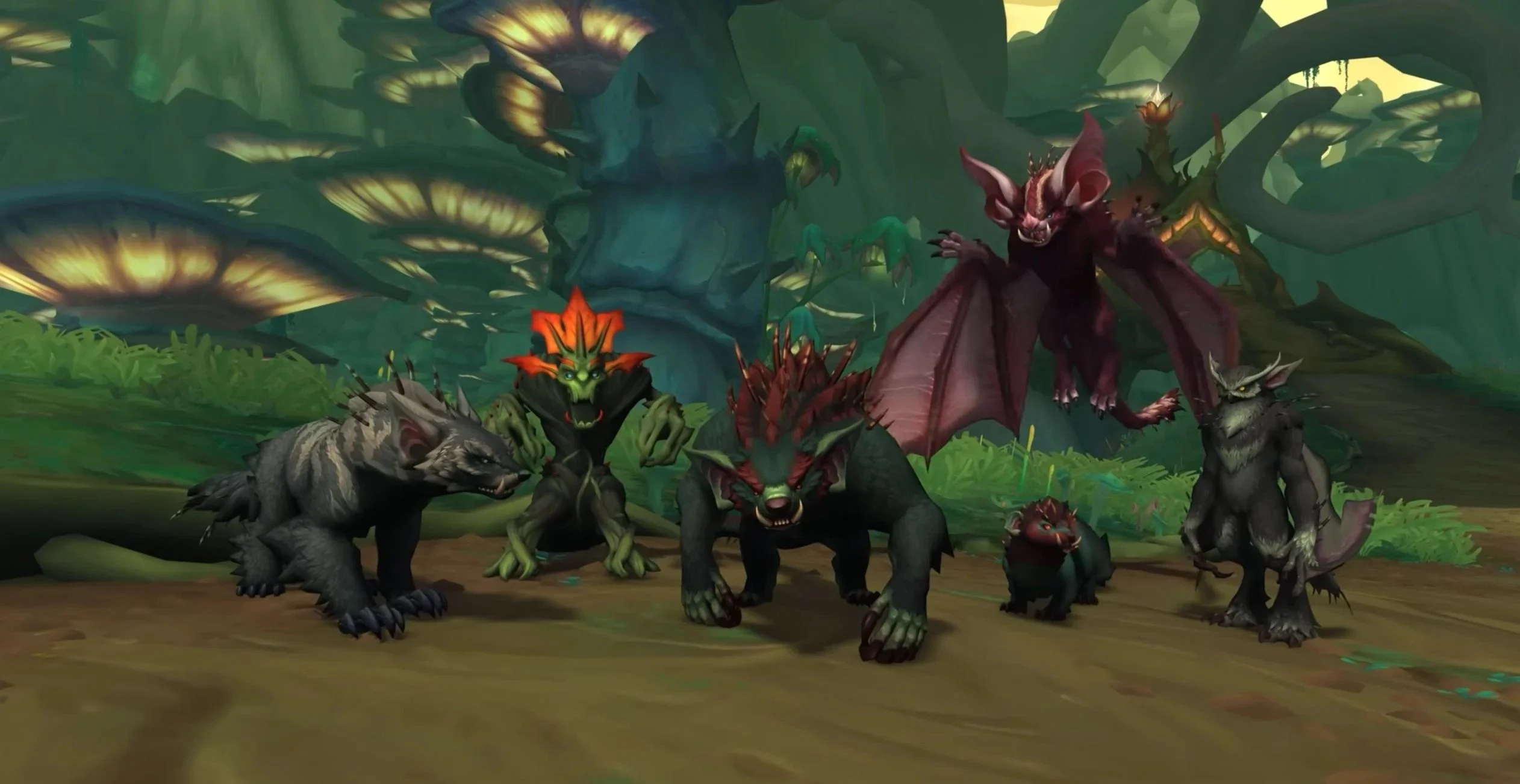
Haranir Druids feel completely distinct from every other druidic tradition in Azeroth. Their shapeshift forms are not based on familiar forest wildlife or ancient wild gods in the usual sense. Instead, they are inspired by creatures adapted to darkness, roots, caves, and subterranean life. Every form feels as if it has grown naturally out of Harandar itself, shaped by thorns, spines, bark, and living tissue connected to the roots of the world trees.
All Haranir druid forms in WoW Midnight feature multiple color variants, giving players the freedom to match their shapeshift appearances with their fur color, body paint, or general visual identity.
Bear Form
The Haranir Bear Form looks like a meeting point between raw physical power and natural armor. Its body resembles a fur-covered pangolin mixed with a heavy beast built for punishment, complete with layered plating and dense spines across the shoulders and back. Distinctive Haranir ears immediately separate it from other bear forms and give it a sharper, more alert silhouette. Visually, it looks perfectly suited for the tank role, projecting the sense of a creature made to endure damage and stand its ground.
Cat Form
Haranir Cat Form moves away from the usual sleek feline style and instead leans into something more grounded, violent, and predatory. Its body shape is closer to a wolverine than a panther, compact, muscular, and built for sudden aggression. Bat-like ears and prominent spines reinforce the subterranean identity of the race. The result is a form that feels ideal for fast strikes, close-range pressure, and movement through tangled roots or confined spaces.
Moonkin Form
Sometimes referred to as the “Batbear” form, the Haranir Moonkin is lean, hostile-looking, and unlike any other Balance Druid appearance currently in the game. It combines an elongated frame with strong limbs, visible webbing along the arms, and heavy spine growth across the body. The head shape and ears push the bat-like influence even further, giving the form a threatening presence. Rather than looking mystical or ceremonial, it feels dangerous and primal, which works extremely well for a druid channeling unstable natural power.
Flight Form
Haranir Flight Form is literally a bat, which makes it one of the most direct and thematically consistent forms the race could have received. Wide wings, sharp outlines, and a compact frame give it a quick, agile look in motion. It feels like a creature meant for dark skies, canopies, and cavern spaces rather than broad sunlit airspace, which matches the Haranir identity almost perfectly.
Travel Form
For ground movement, Haranir Druids transform into a sable-like creature with a long, weasel-inspired body. The design feels fast, efficient, and highly agile, as though it were made for darting through roots, undergrowth, tunnels, and uneven terrain. It is not an especially imposing form, but that fits its purpose well. It looks like something built for speed and maneuverability rather than intimidation.
Aquatic Form
The Haranir Aquatic Form takes on the appearance of an axolotl-like creature with leafy, bioluminescent gills. Those gills can be toggled on or off, which adds an extra layer of customization even within shapeshift form. The design strongly supports the idea of plant and animal life blending together, creating something that feels unusual, alien, and still somehow natural. Its movement and overall appearance make it one of the most visually memorable aquatic forms introduced so far.
Treant Form
The Haranir Treant Form looks less like a summoned servant and more like a literal growth of Harandar brought to life. Thick roots, jagged bark, and thorn-covered protrusions make it appear ancient, uneven, and naturally formed over long periods of time rather than carefully shaped. The silhouette is rough and organic, reinforcing the idea that Haranir Druids do not merely call on nature, but merge with it.
Taken together, these forms give Haranir Druids a unified visual identity that feels deeply rooted in their race fantasy and lore. This brings us to the end of the final section of this Haranir unlock guide. Now it’s time to look back at the key points we covered throughout the article.

Buy WoW Gold
Securely get WoW gold, fast delivery in any amount!
Haranir become available after completing the Emergence storyline during the Midnight campaign. Finishing the entire Harandar questline rewards the Allied Race: Haranir achievement, which unlocks the race for character creation.
Haranir can choose from the following classes:
These options allow Haranir characters to cover every major role, including tanks, healers, melee DPS, and ranged DPS.
Yes. Haranir Druids feature completely unique shapeshift appearances built around their underground and nature-focused theme. These include special Bear, Cat, Moonkin, Flight, Travel, Aquatic, and Treant forms, each available in several color variations.
Your character must reach level 83 before you can begin the Emergence storyline, which is the quest chain required to unlock the Haranir allied race.
The Haranir racial abilities focus on mobility, nature-based utility, and passive combat advantages:
Haranir is an extremely thematic allied race built around nature, roots, and organic identity in nearly every possible way. At a glance, they may remind some players of trolls, at least a little, but their heavy focus on plant-based features, thorny growths, subterranean themes, and unusual druid forms gives them a very different overall feel.
The racial abilities are also quite distinctive, offering an active skill, a unique take on teleportation, and several useful passive bonuses. The Herbalism-related bonus is especially nice for players interested in crafting and gathering. Unlocking the race only requires ten quests, and while you do need the proper level, the process itself looks fairly manageable overall.