


+15 More

Digital Aura Portal - FZCO
Building A1, Dubai Digital Park, Dubai Silicon Oasis, Dubai, United Arab Emirates Premises Number 72647 - 001
Business registration number: 70647


gamer-choice.com © 2026
Digital Aura Portal - FZCO
Building A1, Dubai Digital Park, Dubai Silicon Oasis, Dubai, United Arab Emirates Premises Number 72647 - 001
Business registration number: 70647
 November 29, 20255 min ReadElsa
The more video games evolve, the more genres blend together, borrowing elements and mechanics from one another. Surprisingly, even the most iconic and seemingly straightforward genres can still cause confusion — and one of the biggest culprits is the classic RPG.
Everyone assumes they understand what a role-playing game is. You play as a character, embark on a grand adventure, build up your skills, meet allies, and take part in heroic journeys where good and evil clash. But why, then, do we split this genre into Western RPGs and Japanese RPGs?
Are they truly that different? As it turns out — absolutely. If you want to dive into the core distinctions between these two closely related subgenres, you’re in the right place. Here’s the ultimate comparison!
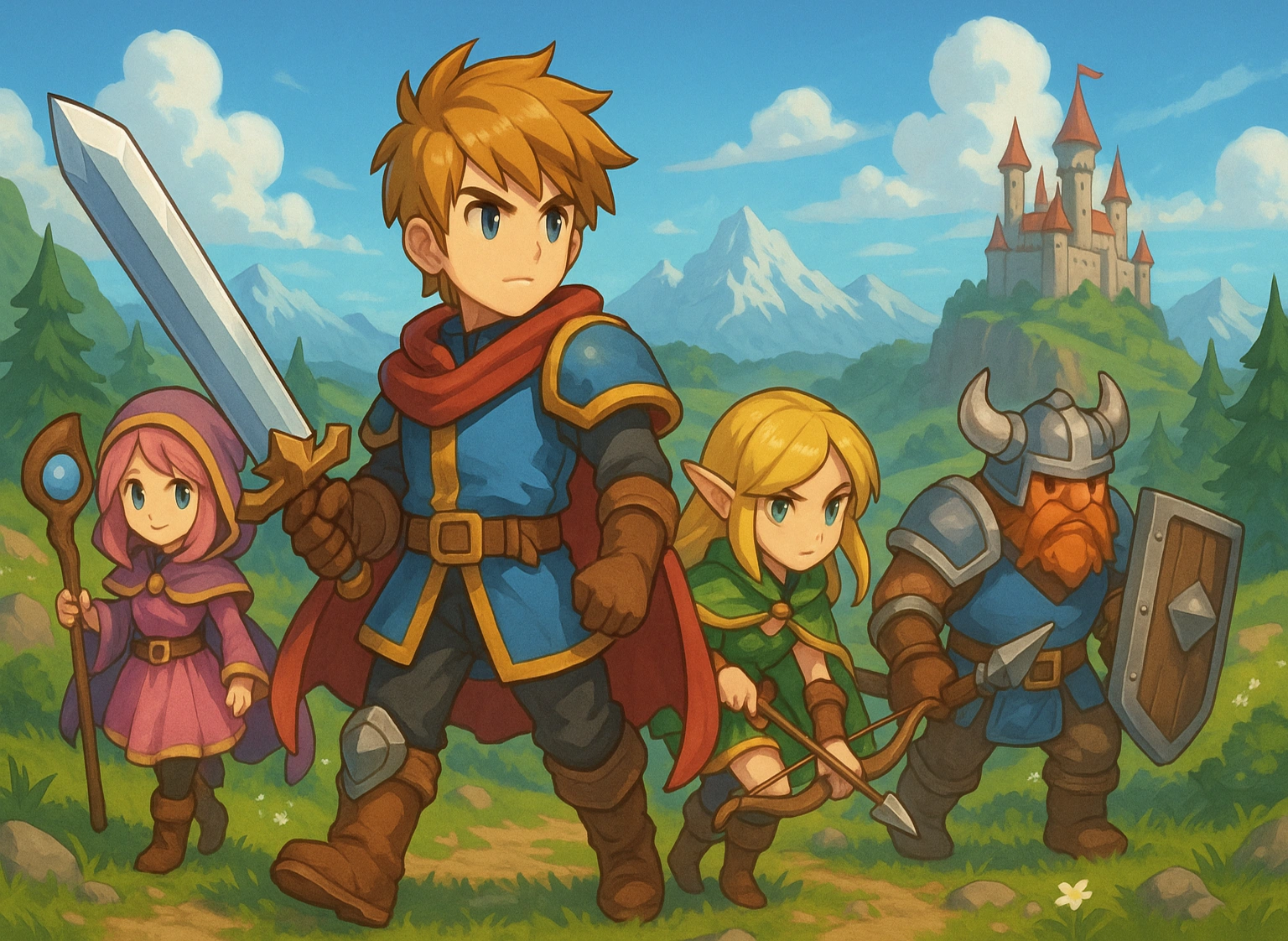
Both styles have roots in tabletop role-playing systems like Dungeons & Dragons. They share familiar elements: character stats such as strength and health, gear progression, and world exploration. So what makes them diverge so dramatically?
The first thing most players assume is that the origin defines the genre — after all, the term “JRPG” directly references Japan. But surprisingly, that alone doesn’t determine the subgenre. A game’s origin isn’t the deciding factor, and there are plenty of exceptions. For example, Dark Souls is a Japanese game but typically isn’t labeled a JRPG. Meanwhile, Cosmic Star Heroine is considered a JRPG even though it was developed by Western creators. So the real question becomes: what actually separates the two?
When choosing a new RPG, the world setting is often the first thing that grabs your attention. Before creating your character or learning the mechanics, you decide whether you want a medieval fantasy quest or a supernatural journey full of spirits and demons.
One of the defining qualities of Western RPGs is the open world. Players can wander freely, exploring regions that have nothing to do with the main quest. JRPGs, on the other hand, typically follow a more structured path. Their worlds are guided and story-driven, with fixed locations you visit in a specific order.
The overall art direction also differs. Western RPGs tend to focus on realism, drawing inspiration from tabletop artwork or gritty fantasy landscapes. Expect ruined kingdoms, cursed forests, and bleak futuristic environments. JRPGs embrace a more imaginative direction, blending fantasy, sci-fi, folklore, and visually extravagant design. Their worlds often incorporate religious themes, Japanese mythology, yokai, spirits, fox-like guardians, or comedic supernatural companions.
No role-playing adventure is complete without a protagonist — and this is where another key difference emerges. In Western RPGs, you usually create your hero from the ground up. You pick their appearance, traits, abilities, and sometimes their origin. From there, the world responds to your choices, and your character evolves in unique ways. Exceptions exist, of course, like Geralt from The Witcher series.
JRPGs typically present predefined protagonists with established personalities, backgrounds, and visual designs. You may choose the main hero at the start, but their identity is already set because they’re meant to blend seamlessly into the story’s world. Their relationships, motivations, and quirks are deliberate parts of the narrative experience.
Character design stands out immediately. JRPG heroes often sport anime-inspired looks: bright-eyed teenagers, quirky animal sidekicks, magical beings, determined schoolgirls, or a close-knit group bonded by friendship. Western RPG characters lean toward gritty or grounded archetypes: seasoned warriors, wandering outcasts, powerful mages, or mysterious adventurers with forgotten pasts.
Because JRPG protagonists are predetermined, their stories are usually linear and tightly plotted. You may have dialogue options, but they rarely alter the story in meaningful ways. The narrative is crafted to unfold the same way for every player, making it easier to share experiences with others who have finished the game.
Western RPGs, however, revolve heavily around choice. Every decision — even minor ones — can have long-lasting consequences. A single misstep can change your ending, reshape the world, or lead to unexpected paths. This player-driven structure emphasizes agency, letting you shape the entire journey.
Gameplay differences between RPGs and JRPGs are especially noticeable in combat. JRPGs traditionally prefer turn-based battles, often shown from stylized camera angles. These fights are flashy, exaggerated, and filled with over-the-top animations no real person could perform.
Western RPGs usually prioritize real-time combat with a more grounded feel. Their animations are less dramatic but aim for immersion and realism.
Party size is another major distinction. JRPGs often include many companions — because, as we’ve mentioned, they help define the world and contribute heavily to storytelling. Friendship, teamwork, and character bonds are central themes. In series like Final Fantasy, you might travel with up to five allies at once.
Western RPGs tend to limit companions. Games like Fallout or The Elder Scrolls usually allow only one follower at a time, emphasizing solitude, survival, and personal decision-making.
Multiplayer support also differs. JRPG developers rarely prioritize multiplayer since the focus is on narrative perfection. If you’re looking for co-op or competitive play, Western RPGs or MMORPGs — many of which are free-to-play — are much more likely to offer it.
There is no definitive “best” between these two subgenres. Each offers something different for players who love role-playing experiences. Now that you understand what sets them apart, choosing the right game becomes much easier. And who knows? As genres continue to evolve, we may soon see even more hybrids blending the strongest elements of both Western and Japanese RPGs.