


+15 More

Digital Aura Portal - FZCO
Building A1, Dubai Digital Park, Dubai Silicon Oasis, Dubai, United Arab Emirates Premises Number 72647 - 001
Business registration number: 70647


gamer-choice.com © 2026
Digital Aura Portal - FZCO
Building A1, Dubai Digital Park, Dubai Silicon Oasis, Dubai, United Arab Emirates Premises Number 72647 - 001
Business registration number: 70647
 August 20, 20255 min ReadElsa
For new members in OSRS, Farming can feel like one of the more intimidating skills to begin training. Where do you even start? What exactly should you do? And why do crops seem to keep dying so often? Don’t stress too much—most players struggle to understand the mechanics of Farming and many avoid the skill altogether. If you’re wondering what farming patches are, why there are different varieties, or where you should go to access them, you’ve come to the right place! In this guide, we’ll cover the basics of the Farming skill, explain farming patches in detail, and show you where to find the ones you need.

Buy OSRS Gold
Get OSRS gold today and level up quicker!

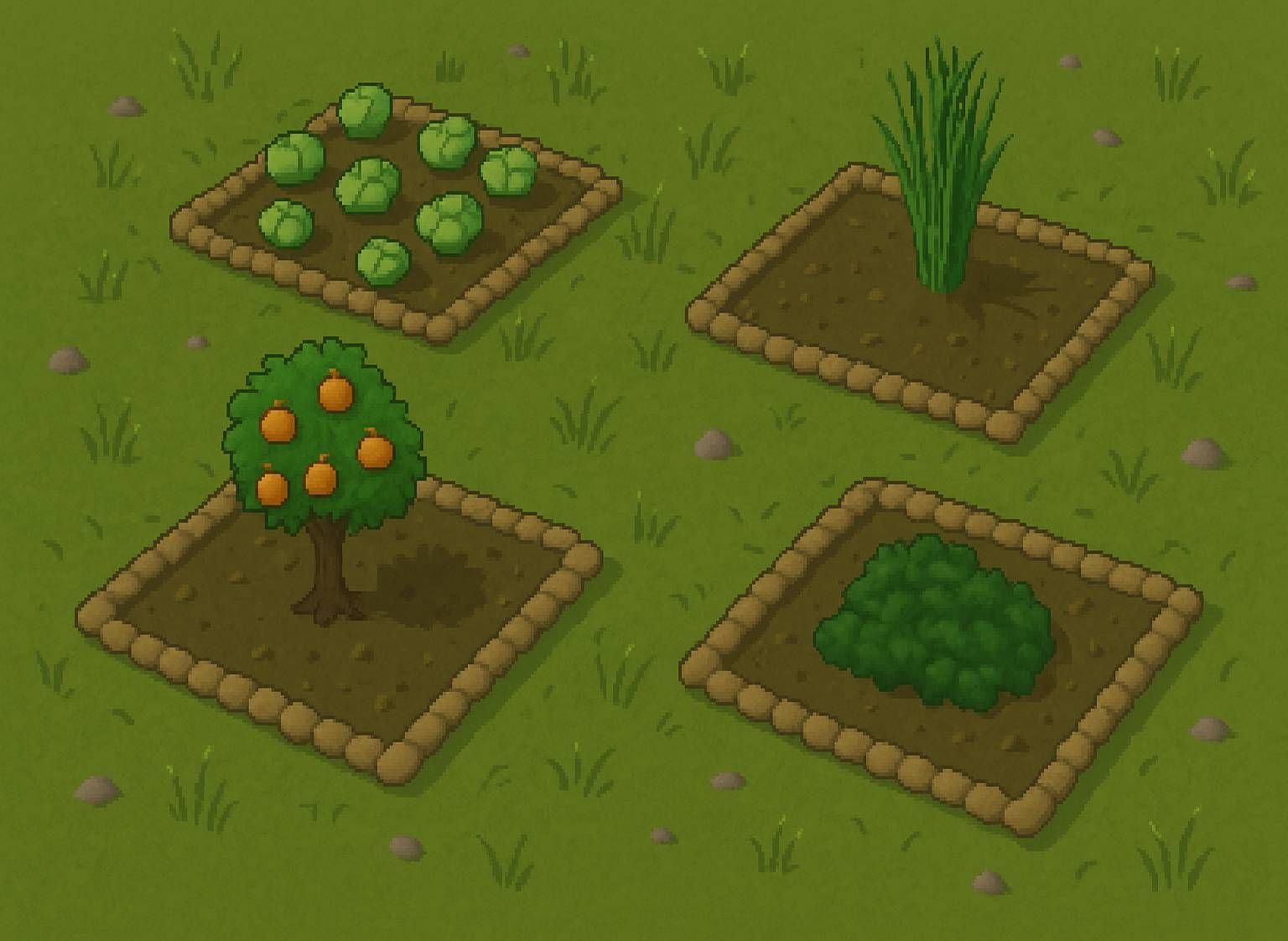
First off, what is Farming in OSRS all about? The Farming skill gives players the ability to plant seeds and harvest them for various useful resources. Seeds come in many types, but they generally fall into eight categories: allotment, flower, herb, hops, bush, trees, fruit trees, and special crops. Each category of crop has its own farming patches scattered throughout Gielinor. The exceptions are flowers, which can be planted in any flower patch, and special crops, which each have a unique location designed specifically for them.
Every seed type comes with its own set of requirements. For example, tree seeds must first be combined with tree pots to make saplings before they can be planted. Allotments need three of the same seed type to grow a single plant. On top of that, certain crops are vulnerable to disease, though that’s a topic for another day. For now, just keep in mind that it’s important to research the needs and costs of your chosen crop type before investing large amounts of gold into seeds.
Before jumping into Farming, you’ll want to consider the growth times of different crops and how much time you plan to invest in crop runs. Growth cycles vary greatly, and once fully grown, crops won’t die if left unharvested. That means you could come back days or even weeks later to collect them. Many players take advantage of this by doing regular “crop runs” to build experience and earn profits passively. If you prefer checking in every few days, longer-growth crops may suit you. On the other hand, if you’re playing for several hours each day, you might prefer quicker crops you can harvest multiple times.
Another factor is travel. High-level players with access to teleport spells, fairy rings, diaries, and high Agility will move much more efficiently between farming patches than newer players who may only have access to one or two patches. If you only have time for a single patch, that’s fine, but your crop runs will expand greatly as your mobility improves.
Once you’ve chosen your crops and figured out how much time you want to invest, the next step is finding the right locations. Farming patches are distributed all across RuneScape, and most crop types have around five usable patches. A good strategy is to plan routes that include multiple nearby patches, making crop runs faster and more rewarding. Below, you’ll find a breakdown of OSRS farming patches, listed from beginner-friendly to high-level areas.
At first glance, this may look overwhelming, but once you map them out you’ll notice clusters of farming patches that can be visited together in efficient crop runs. You don’t need to use every single patch available, especially when starting out. Even a simple Lumbridge teleport route can be surprisingly effective for low-level farmers.

Buy OSRS Accounts
Get OSRS accounts with maxed stats and gear!
A great starter method involves using the Lumbridge Home Teleport. From Lumbridge Castle, head west to the Tree patch located in the forest. Continue westward to the allotment patch south of Falador. From there, move further west to Rimmington to access the Bush patch. Turning north brings you to Falador, where you can farm the Tree patch inside the gardens and even use the bank nearby. Afterward, you can either continue toward Catherby to access both allotment and fruit tree patches, or head east into Varrock. In Varrock, plant at the Tree patch within the castle, then travel south to hit both the Bush and Hops patches on the way back toward Lumbridge.
Hopefully this OSRS Farming guide has helped clear up some of the confusion about farming patches and how to use them effectively. As you progress, Farming can become much more complex, especially if you’re optimizing for gp/hour and xp/hour, but for beginners or casual players, this strategy will serve you well. Farming doesn’t have to be a stressful skill—it can actually be one of the most relaxed and profitable activities in the game once you get into a rhythm. Whether you’re using Gamer Choice for tips or exploring on your own, understanding farming patches is the first step to mastering the skill!